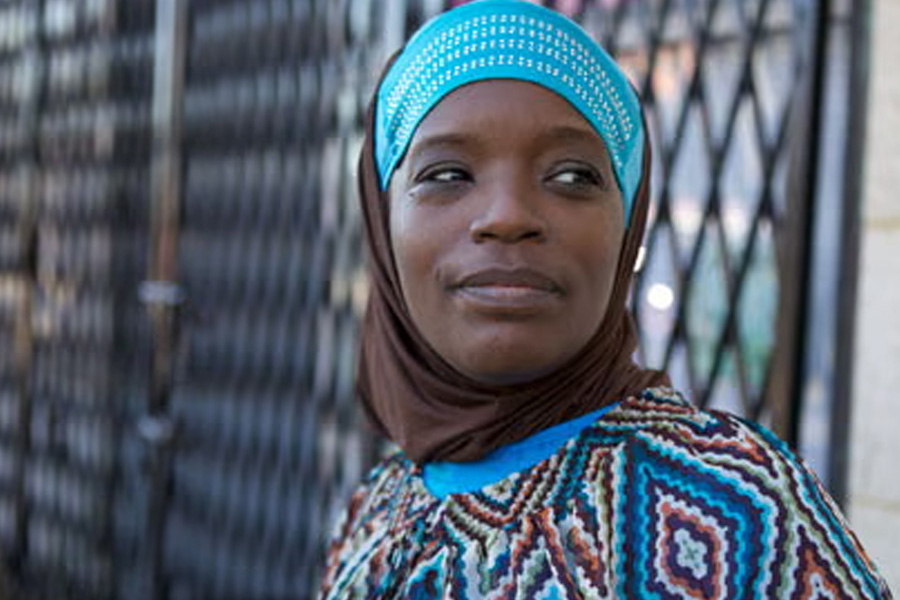
Basic Information
| Item | Detail |
|---|---|
| Full name | Ameena Matthews |
| Born | September 28, 1967 |
| Birthplace | Chicago, Illinois |
| Professions | Anti-violence activist, community psychologist, restorative justice practitioner, founder/CEO (Pause for Peace) |
| Early affiliation | First female violence interrupter with CeaseFire (later Cure Violence) — started 2006 |
| Documentary | Featured in The Interrupters (2011) |
| Health | Diagnosed with Multiple Myeloma in 2014; underwent stem cell transplant |
| Education | Holds a PhD (research on criminalization, trauma, and brain development) |
| Political activity | Candidate, U.S. Congress, Illinois 1st District (2019) |
| Current roles (as of 2025) | CEO of Pause for Peace; community trainer and restorative-practice clinician |
Early life: South Side roots, family pressure, survival
Ameena Matthews was born on September 28, 1967, on Chicago’s South Side under difficult circumstances and without her father, who was imprisoned early in her life. She was raised by her grandmother, Annie Gibson Bacon, a family stabilizer. Gang culture, narcotics, and street violence influenced her youth. That time gave her street credibility and helped her become a violence interrupter since she knew the networks, codes, and faces.
Turning point: faith, art, and a new purpose
Ameena changed through faith and art. She converted to Islam and used music, dance, and spoken word to promote peace. That change took time. It resulted from loss, thought, and a conscious shift from participating in violence to interrupting it. Her faith-centered life saved her and became a popular dispute-resolution strategy.
Violence interruption and Pause for Peace
Ameena was the first female violence interrupter with CeaseFire (later Cure Violence) in 2006. She interrupted conflicts on the ground to prevent shootings. She was credible from experience and authoritative from calm, consistency, and relationships. She started Pause for Peace, which provides summer programs, restorative justice trainings, supply drives, and community healing for traumatized and violent adolescents and families.
| Program type | Purpose |
|---|---|
| School and youth programs | Provide alternatives to violence and build coping skills |
| Restorative justice training | Teach conflict mediation and community accountability |
| Trauma support & supply drives | Address immediate needs and build trust |
She also taught interrupters in Kenosha and other programs that view violence as a public-health issue rather than a crime.
Public recognition and the documentary moment
The Interrupters, a 2011 documentary about Chicago neighborhood mediators stopping shootings, brought Ameena’s work to national audiences. The film highlighted her voice and the CeaseFire model. Following that notoriety, she got civic and cultural accolades and was designated a changemaker for turning street disputes into conversations.
Health crisis: diagnosis, community support, and transplant
Numerous myeloma was discovered in Ameena in 2014. Her diagnosis corresponded with organizational and personal turmoil; she had been fired and lacked health insurance. The community rallied. Individual donations, fundraising, and a public appeal sponsored her care. Her father, despite long-term jail, gave stem cells for her transplant. The incident showed her fragility and the strength of her work-based community.
Education and research perspective
PhD-holder Ameena views her activism academically. Her research examines how trauma and criminality of young Black men affect brain development and life paths. Her programs blend practical mediation with evidence-based techniques due to her academic background. Her work combines community organization, therapeutic practice, and restorative justice.
Family, relationships, and personal network
| Family member | Relationship | Notes |
|---|---|---|
| Jeff Fort | Father | Founder of the Black P. Stone Nation / El Rukn; incarcerated since the 1980s and later contributed stem cells for her transplant. |
| Annie Gibson Bacon | Grandmother | Raised Ameena and provided early stability and a community anchor on the South Side. |
| Unnamed mother | Mother | Played a role in upbringing; public details limited. |
| Unnamed brother | Brother | Killed on Chicago streets; his death deeply influenced Ameena’s anti-violence commitment. |
| Shaykh Dr. Abdur Rashied Matthews | Husband | A Muslim community leader and partner in faith and social-change work. |
| Unnamed daughter | Daughter | Kept private; cited as central to Ameena’s motivation to create safer neighborhoods for the next generation. |
Family relationships are complex and paradoxical. The absence and fame of her father contrast with her grandmother’s stability and husband’s protection. Tragic events like a brother’s murder inspired public duty.
Politics, nonprofit leadership, and public strategy
Ameena ran for US in 2019. She ran for Illinois’ 1st District Congress on public safety, criminal justice reform, and women’s rights. She lost, but the campaign showed how street-level initiatives can influence policy. She influences local violence reduction efforts through grassroots techniques, policy campaigning, and training as Pause for Peace CEO.
Financial snapshot and organizational funding
Ameena works for a cause, not money. She needed community fundraising to pay for her 2014 illness without employment-based health insurance. That contrasts with her public prominence and illustrates systemic shortcomings for grassroots leaders who risk health and stability serving vulnerable communities.
Recent media presence and activity (through 2025)
Ameena advocated for violence prevention and restorative practice till 2025. She still speaks, trains, and appears in public forums, and she posts updates and reflections on social media as a community psychologist and Pause for Peace CEO. Her story is used in educational modules, podcasts, and discussions about urban violence and healing.
FAQ
When and where was Ameena Matthews born?
Ameena Matthews was born on September 28, 1967, in Chicago, Illinois.
What made her a credible violence interrupter?
Living on Chicago’s South Side, faith-driven transformation, and years of street-level mediation gave her uncommon credibility.
What organization did she found?
She founded Pause for Peace, an organization focused on restorative practices, youth programming, and community healing.
What documentary featured her work?
Her work was prominently featured in the 2011 documentary The Interrupters.
What major health challenge did she face?
In 2014 she was diagnosed with Multiple Myeloma and later received a stem cell transplant.
Who in her family influenced her upbringing?
Her grandmother, Annie Gibson Bacon, provided major stability and played a central role in raising her.
Did her father participate in her treatment?
Yes; despite long-term incarceration, her father, Jeff Fort, contributed stem cells that were used in her transplant.
Has she held elected office?
No; she ran for U.S. Congress in Illinois’ 1st District in 2019 but did not win.
What is her academic background?
She holds a PhD and conducts research on trauma, criminalization, and brain development as they affect young Black men.
What is her current role?
As of 2025 she serves as CEO of Pause for Peace and remains active as a restorative-practice clinician and trainer.
Strategies For Optimizing Floor Plans In Compact Homes
The Health Benefits Of Medically Supervised Detox
How A Tree Farm Supports Healthy Landscape Development
Home Injury Liability What Owners Must Know
How To Set The Perfect Rental Price For Your Investment Property


